At-Home Hair Removal vs. Dermatology Clinic Treatment: What's the Difference?
Deciding between an at-home hair removal device and a professional dermatology treatment is a common dilemma. While the two methods rely on similar principles, they differ meaningfully in effectiveness, cost, and maintenance—making the right choice harder to pin down than it first appears.
This article compares at-home and clinic-based hair removal across effectiveness, cost, and longevity, so you can make a more informed decision.
Three-Sentence Summary
Clinic treatments deliver noticeably greater hair reduction than at-home devices, since at-home devices are intentionally designed with lower output for safety.
At-home devices require a one-time purchase followed by longer sessions, while clinic treatments involve per-session costs but are completed much faster.
If your priority is a clear, dramatic reduction, a clinic is the better fit; if you'd rather manage multiple areas consistently and affordably, an at-home device may suit you better.
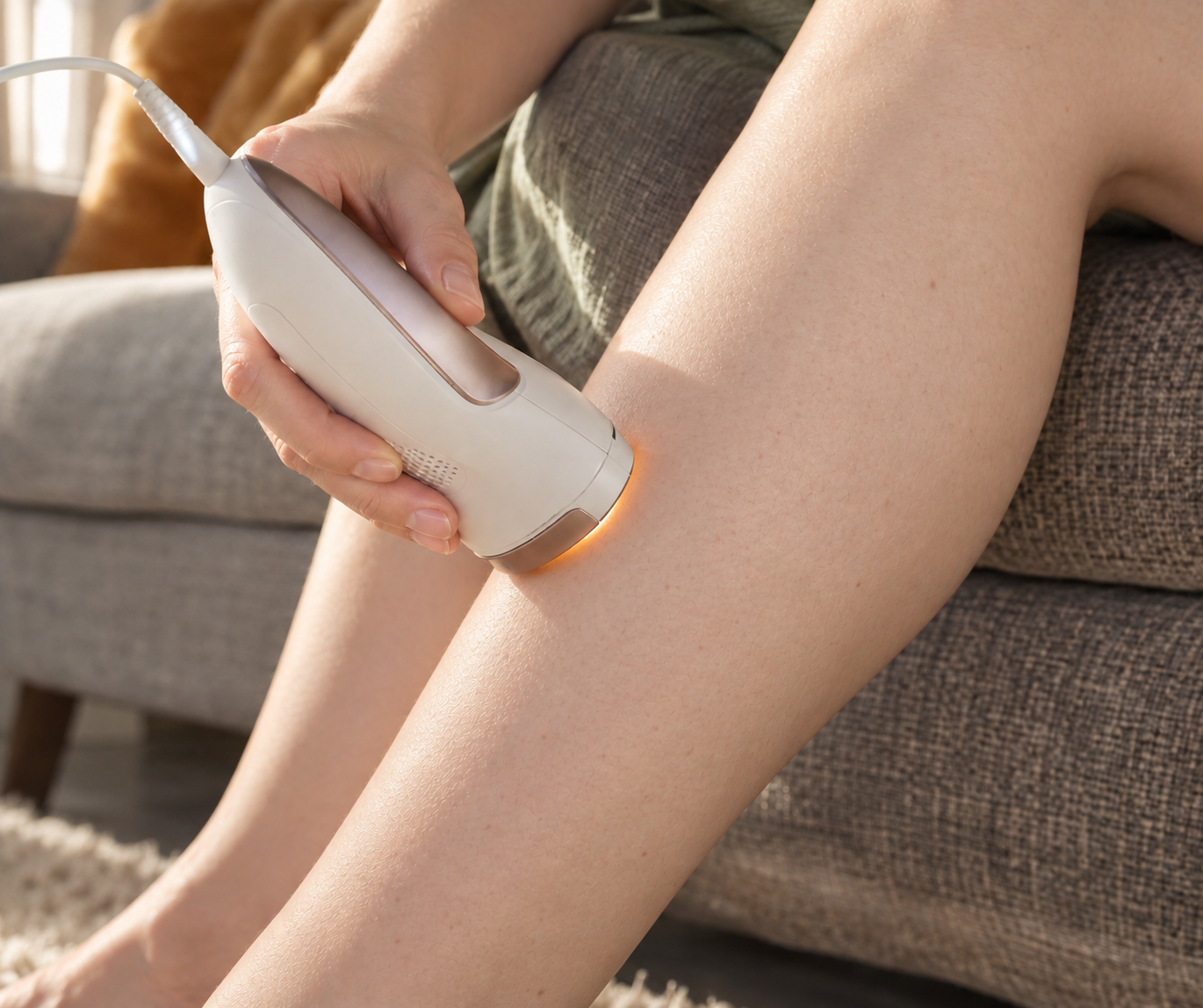
Table of Contents
How Much Does the Effectiveness Differ?
Cost and Treatment Time Comparison
Is Permanent Hair Removal Possible?
Which Option Is Right for You?
Frequently Asked Questions
1. How Much Does the Effectiveness Differ?
When comparing the same body area, clinic treatments consistently show greater hair reduction. In one study, after six underarm sessions, clinic laser treatment achieved roughly 85–88% reduction, compared to approximately 46–52% for at-home devices—a substantial gap.¹
This difference exists because at-home devices, intended for unsupervised use, are deliberately calibrated to lower output levels to prevent burns and other risks.
This doesn't mean at-home devices are ineffective. Because the output is lower, results tend to appear more gradually—better understood as a steady, ongoing maintenance approach rather than a fast, dramatic reduction.
Results vary depending on the treatment area, device, and individual hair characteristics.
¹ Hendricks et al., comparative study, 2023
2. Cost and Treatment Time Comparison
In terms of cost, at-home devices require a single upfront purchase, after which they can be used repeatedly at no additional cost. Clinic treatments, by contrast, charge per session, and since 10 or more sessions are often recommended, the total cost can add up.
Category | At-Home Device | Clinic Treatment |
|---|---|---|
Average Cost | Approx. $75–$375 (device) | Per session, by area: · Full arms: $37–$75 · Full legs: $45–$90 · Brazilian: $37–$90 · Small areas (e.g., upper lip): $4–$15 |
There's also a notable time difference. At-home devices treat a smaller surface area per pulse, requiring the area to be worked over repeatedly—meaning larger areas like arms or legs can take considerable time to complete on your own. Clinic equipment, with higher output and broader coverage per pulse, finishes the same area far more quickly.
Clinic treatment prices in the table may vary significantly depending on clinic promotions and packages.
3. Is Permanent Hair Removal Possible?
Neither at-home nor clinic treatments provide truly permanent hair removal—both are more accurately described as semi-permanent.² Over time, hair follicles can recover and hair may regrow, so neither option guarantees complete, lasting removal.
That said, because clinic devices operate at higher output levels, they tend to be more effective for those seeking a clear, pronounced reduction. Using an at-home device to maintain results after clinic treatment can also help extend the effect over a longer period.
Results and duration vary depending on individual skin and hair type, as well as maintenance habits.
² Haedersdal et al., systematic review, 2006
4. Which Option Is Right for You?
Here's how the comparison breaks down by situation.
At-home devices may be a better fit if you:
Want to manage larger areas like arms or legs on your own, without added cost pressure
Want to maintain results after a clinic treatment has already reduced hair growth
Are comfortable with longer sessions in exchange for a one-time cost
Find clinic visits inconvenient or would rather avoid them
Clinic treatment may be a better fit if you:
Want a fast, clear reduction in thick, coarse hair
Prefer to complete treatment in a short amount of time
Are concerned about managing output settings or potential side effects on your own
5. Frequently Asked Questions
Q. Can I trust a clinic that offers unusually low prices?
Price alone isn't a reliable indicator—it's worth checking clinic reviews as well. The outcome and safety of laser hair removal depend less on the type of equipment and more on the wavelength and output settings used, as well as the practitioner's skill and experience. In fact, one consumer protection agency's analysis found that a significant share of laser hair removal side effects stemmed from improper procedures.³ Even at a lower per-session price, it's worth confirming that the clinic provides thorough consultation and explanation before treatment.
Q. Does going to a clinic guarantee safety?
Not necessarily. Even in a clinical setting, improperly calibrated output or inadequate care can lead to burns, blistering, or hyperpigmentation. The same consumer protection data found that most people who experienced side effects had not received adequate explanation before their procedure. Rather than assuming safety based on the clinic setting alone, it's important to confirm that risks and precautions are clearly explained beforehand.
Q. Is laser hair removal better than waxing?
It depends on your goal. Waxing removes hair that has already grown, so regrowth tends to be faster, and repeated waxing doesn't thin the hair over time. Laser hair removal, on the other hand, offers longer-lasting results and tends to thin hair with repeated sessions—making it the better choice if your goal is a long-term reduction in hair growth itself.
³ Korea Consumer Agency counseling case analysis, 2009 (reported by Medical Times)

Anti-Aging Center Director