When Does the Ulthera Effect Appear and How Long Does It Last?
Right after the procedure, many people worry that there's no visible change and wonder if the treatment didn't work. This article explains why Ulthera's effects aren't visible immediately, when they become most noticeable, and how long they last — along with the collagen regeneration mechanism behind it.
The Ulthera effect appears gradually over 2–3 months as heat stimulation prompts the skin to produce its own collagen, with the most noticeable results appearing at 3–6 months. How long the effect lasts varies by individual depending on sun protection habits and lifestyle, but it generally lasts 6 months to a year or more.
Table of Contents
Why doesn't the Ulthera effect appear right away?
Stages of effect development after the procedure, by time period
Key factors for maintaining the effect longer
Should you get retreatment as soon as the effect fades?
FAQ
1. Why Doesn't the Ulthera Effect Appear Right Away
Ulthera (HIFU) does not work by directly injecting collagen into the skin. Instead, the heat stimulation generated by the energy sends damage-and-repair signals to skin cells, and during that repair process, the skin produces collagen on its own. This process takes place invisibly beneath the skin's surface.
What's initially produced is structurally immature, early-stage collagen. After this early collagen fills in the area, a remodeling process occurs over about 2–3 months in which it is replaced by stronger, denser mature collagen. The lifting effect appears precisely when this replacement with mature collagen is complete.
Research has confirmed that new collagen and elastic fibers are produced within the skin following HIFU heat stimulation. (Oh S et al., Cells, 2023)
2. Stages of Effect Development After the Procedure, by Time Period
Here is a stage-by-stage summary of what happens beneath the skin over time after the procedure.
Time Period | Changes Beneath the Skin | Visible Changes |
|---|---|---|
Immediately after–1 week | Tissue response begins from heat stimulation; temporary redness and swelling | Redness and swelling subside within a few days |
1–4 weeks | Early-stage collagen formation begins | Skin tightening or slight elasticity changes may start to be felt |
2–3 months | Remodeling into mature collagen progresses | Lifting effect becomes gradually more noticeable |
3–6 months | Collagen remodeling reaches completion | Effect is at its most noticeable |
A comprehensive analysis of multiple clinical studies found that HIFU lifting effects become significant starting 60–90 days after the procedure. (Ayatollahi et al., Lasers Med Sci, 2020)
The lack of change immediately after the procedure is because collagen regeneration is still in progress. At the 1–4 week mark, some people first notice skin tightening or a slight change in elasticity, but this is a response from early-stage collagen beginning to fill in the area, not the lifting effect itself.
The 3–6 month window during which the effect becomes most noticeable varies depending on an individual's rate of collagen synthesis and skin regeneration capacity. If skin regeneration is slower, the remodeling period may take longer, so rather than judging the effect at the 3-month mark, it's recommended to wait and check at the 6-month mark.
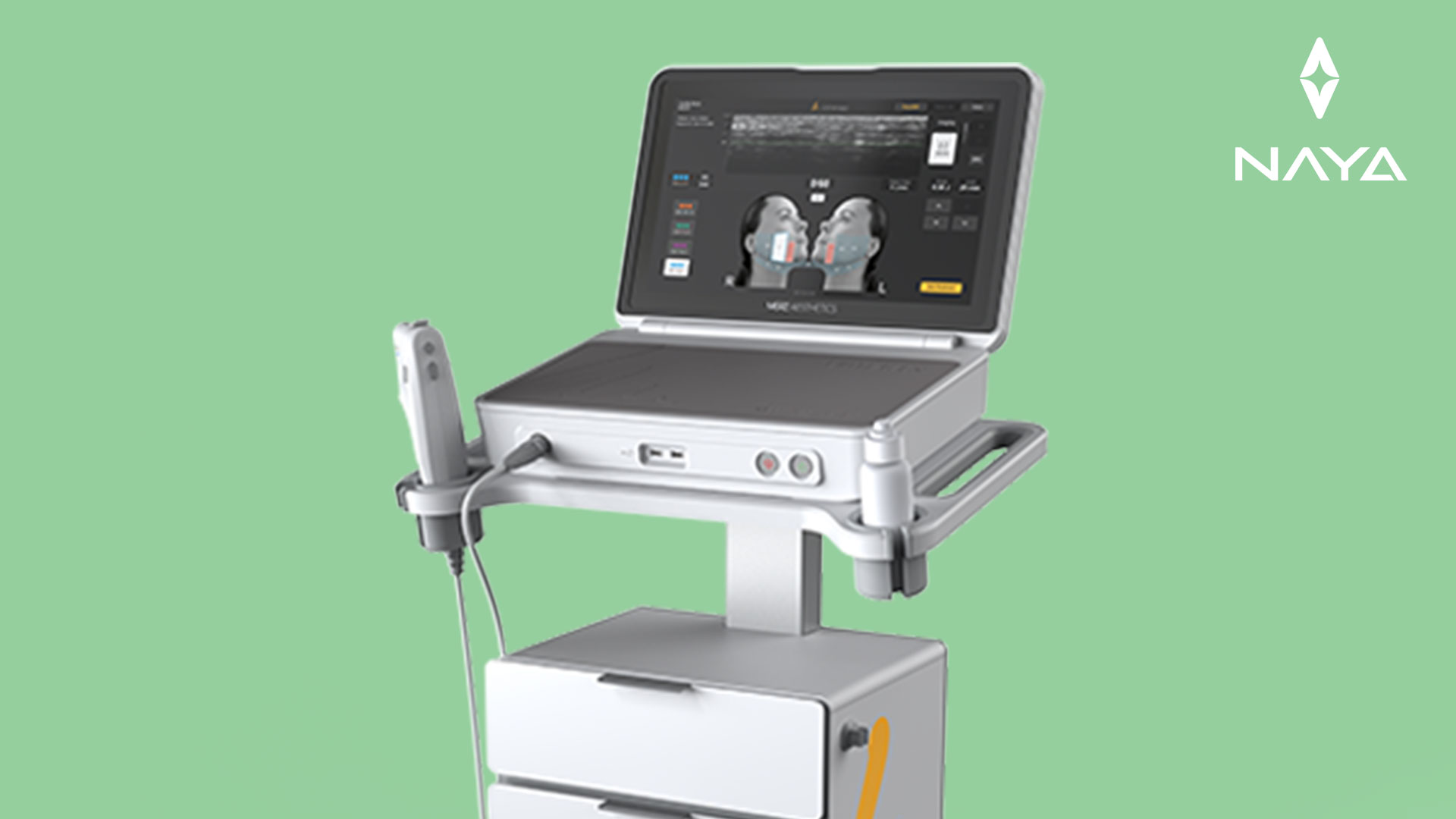
▲ HIFU collagen-regenerating lifting device
3. Key Factors for Maintaining the Effect Longer
How long the effect lasts varies depending on an individual's skin condition and lifestyle habits. Generally, it lasts about 6 months to a year, and the following factors influence its duration.
Regarding baseline skin condition, the more severe the sagging, the relatively smaller the perceived effect from a single session may be, while for mild sagging, a single session is often enough to maintain results for a long time. As for age, the rate of collagen synthesis gradually begins to decline around age 25, and skin regeneration capacity also declines with age. The lower the regeneration capacity, the longer the remodeling period, which can delay when the effect becomes noticeable or change its intensity. Regarding sun protection, continued UV exposure while collagen regeneration is underway after the procedure accelerates collagen breakdown, so applying sunscreen diligently during this period helps maintain the effect. Smoking, drinking, and sleep are also important — smoking suppresses collagen synthesis and promotes its breakdown, so reducing smoking and heavy drinking and getting sufficient sleep during the 2–3 months of active collagen regeneration after the procedure creates a more favorable environment for regeneration.
Of these, sun protection is the most immediate and controllable variable. This is because if UV damage overlaps with the period when new collagen is being formed, the rate of breakdown outpaces the rate of regeneration.
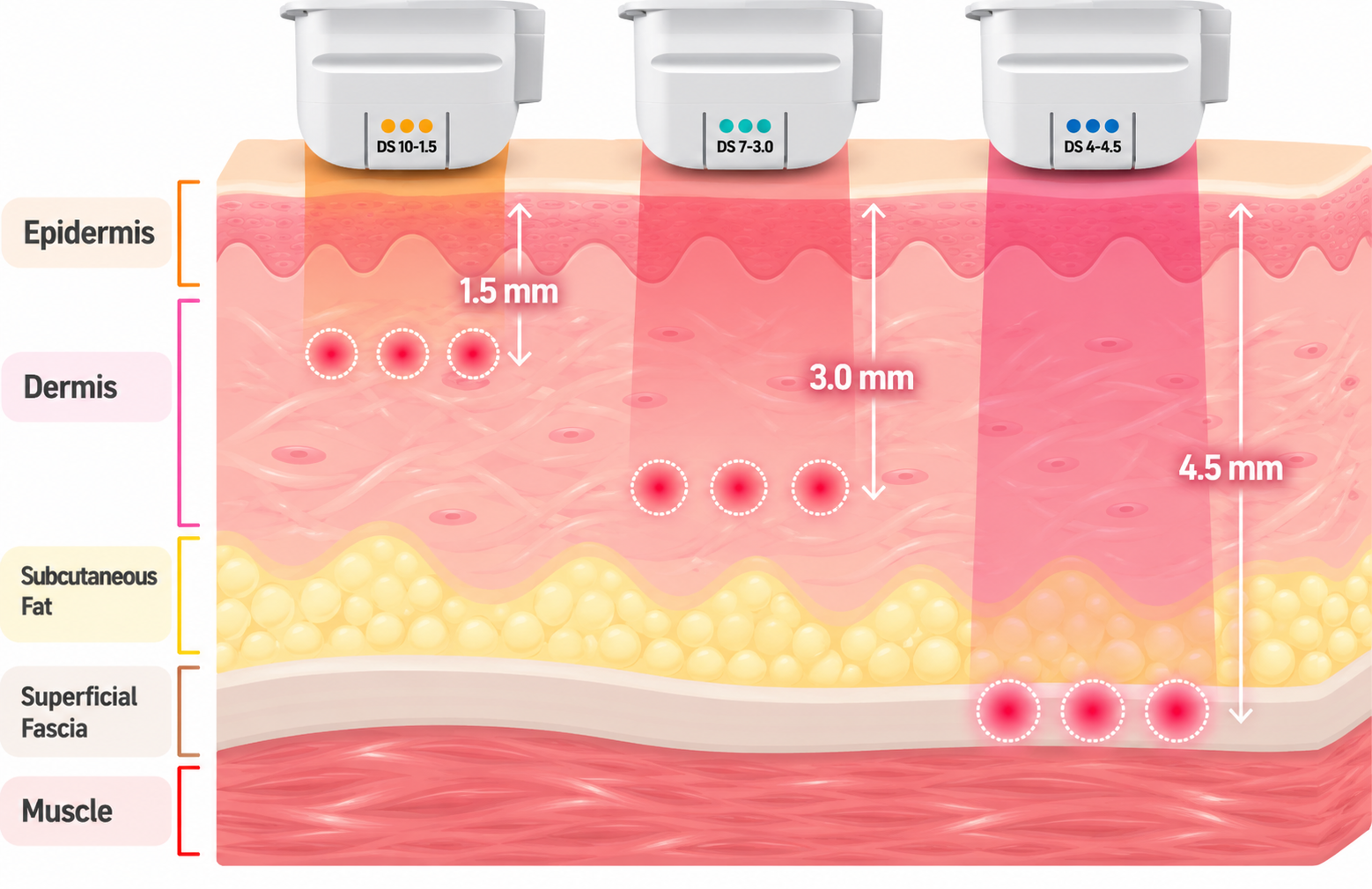
▲ Ultherapy Prime — energy depth by tip
4. Should You Get Retreatment as Soon as the Effect Fades?
Because collagen naturally breaks down, the effect of the procedure gradually fades over time as well. This isn't a sign that the treatment failed — it's the collagen regeneration-and-breakdown cycle functioning normally — and the point at which the effect starts to fade doesn't necessarily mean it's time for retreatment.
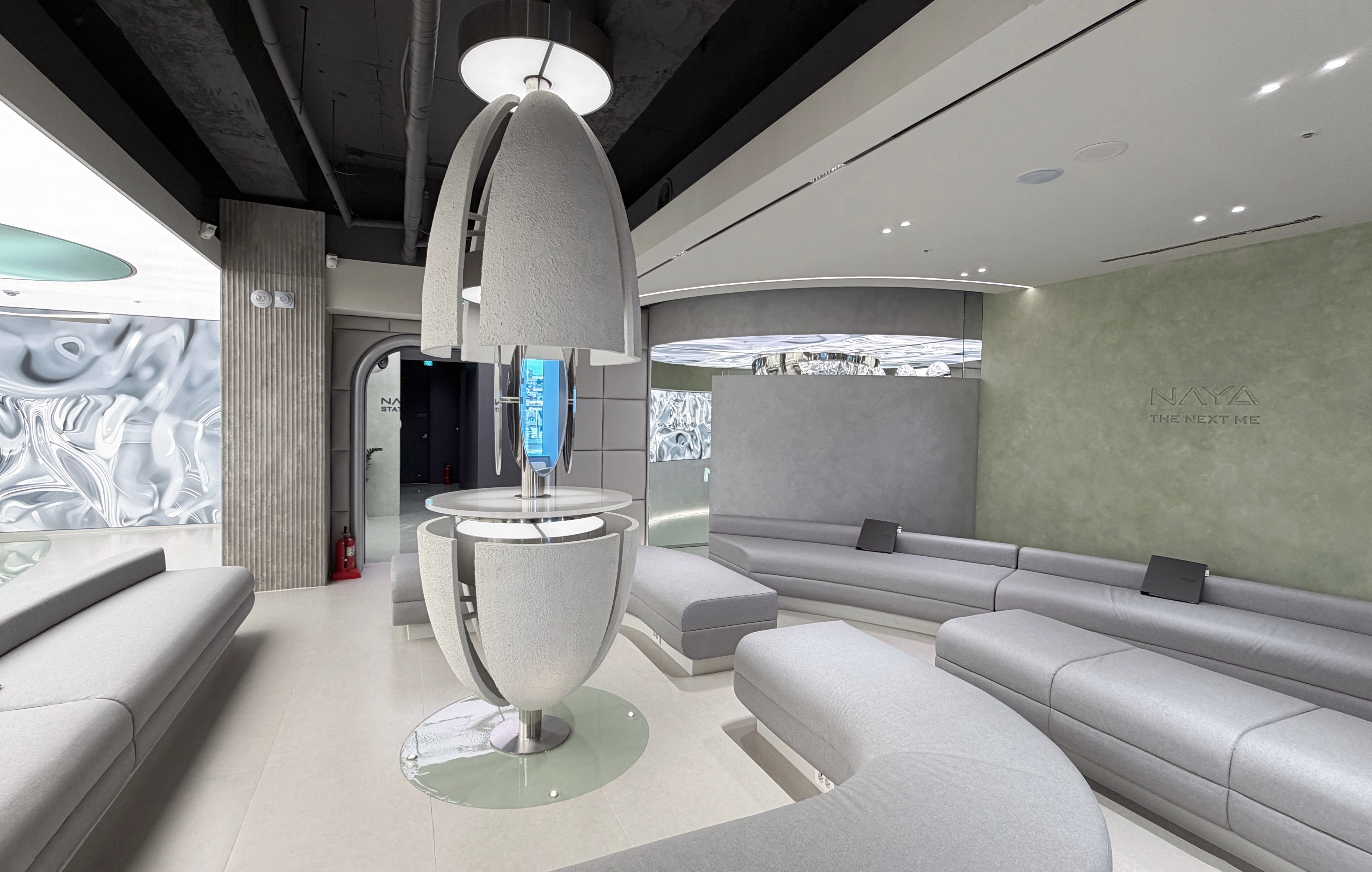
▲ NAYA Clinic waiting place
FAQ
Q. When does the Ulthera effect start to appear?
A. It doesn't appear right after the procedure — it develops gradually over 2–3 months, and the effect is most noticeable at 3–6 months. At the 1-month mark, mature collagen replacement is still in progress, so it's normal not to feel a change yet.
Q. How long does the Ulthera effect typically last?
A. It generally lasts 6 months to a year or more, but there is individual variation depending on sun protection and lifestyle habits. The point at which the effect gradually fades is the benchmark for considering retreatment.
Q. What should I do to help the Ulthera effect last longer?
A. The most important thing is to apply sunscreen diligently during the 2–3 months while collagen regeneration is underway. Smoking and heavy drinking accelerate collagen breakdown, so reducing them during this period helps. Sun protection care after the procedure is also something we at NAYA Clinic provide as essential guidance.
Q. Does the Ulthera effect disappear rapidly once it passes its peak?
A. No, it does not disappear rapidly. It fades gradually as collagen naturally breaks down, and with good sun protection care, the duration of the effect can be extended further.
This content is provided for medical informational purposes only, and effects and side effects may vary by individual condition. Please consult a medical professional before making a decision about diagnosis or treatment.
Some images in this article were AI-generated to aid understanding and may differ from actual treatment results.
References
(1) Oh S et al., Cells, 2023
(2) Ayatollahi et al., Lasers Med Sci, 2020

Anti-Aging Center Director